
Yes, replacing a 20-year-old boiler is usually worth it. Boilers of this age are inefficient, more likely to break down, and cost significantly more to run. A modern condensing boiler can reduce energy bills by up to 30% while improving reliability and heating performance.
If your boiler is over 20 years old, you may be wondering whether it’s better to keep repairing it or invest in a replacement. While older boilers can continue working, they often become inefficient, unreliable, and expensive to maintain.
How long does a boiler usually last?
Most boilers in the UK are designed to last between 10 and 15 years. With regular servicing, some may reach 20 years, but efficiency and reliability typically decline significantly beyond this point.
What are the signs a 20-year-old boiler needs replacing?
- Frequent breakdowns or repair call-outs
- Rising energy bills
- Uneven heating or cold radiators
- Unusual noises such as banging or whistling
- Difficulty sourcing replacement parts
5 reasons to replace a 20-year-old boiler
- Old boilers operate at much lower efficiency levels
- Breakdowns become more frequent after 20 years
- Spare parts are often discontinued
- Modern boilers significantly reduce heating costs
- New boilers offer improved safety and reliability
Old boiler vs new boiler comparison
| Feature | 20-Year-Old Boiler | Modern Boiler |
|---|---|---|
| Efficiency | 60–70% | 90–94% |
| Breakdown risk | High | Low |
| Running costs | Higher | Lower |
| Replacement parts | Limited availability | Widely available |
Is it cheaper to repair or replace an old boiler?
While repairing an older boiler may seem cheaper short term, frequent repairs can quickly exceed the cost of replacement. If repair costs exceed 30–40% of the price of a new boiler, replacement is usually the better long-term option.
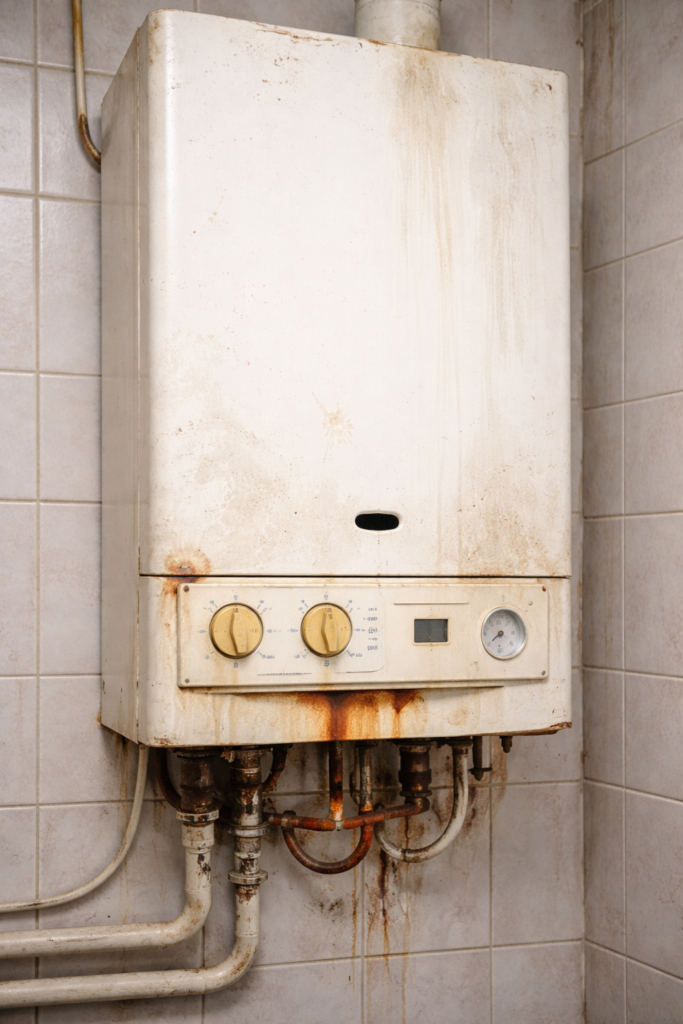
Is It Worth Replacing a 20-Year-Old Boiler?
In most cases, yes — replacing a 20-year-old boiler is worth it, both financially and practically. Boilers of this age are far less efficient, more prone to breakdowns, and often cost more to run and repair than a modern replacement.
If your boiler is over 20 years old, it’s likely operating at 60–70% efficiency, compared to 90%+ for modern condensing boilers. That difference alone can mean hundreds of pounds per year in wasted energy.
How Long Is a Boiler Supposed to Last?
Most boilers in the UK have an average lifespan of:
- 10–15 years with regular servicing
- 15–20 years at the absolute maximum
Once a boiler reaches 20 years old, it is considered well beyond its intended service life, even if it still works occasionally.
Signs a 20-Year-Old Boiler Should Be Replaced
If your boiler is over 20 years old and you notice any of the following, replacement is strongly recommended:
- Frequent breakdowns or call-outs
- Rising repair costs
- Uneven heating or cold radiators
- Noisy operation (banging, kettling, whistling)
- Difficulty finding replacement parts
- Higher energy bills year-on-year
Older boilers often fail without warning, leaving homeowners with no heating or hot water — usually at the worst possible time (winter).
Energy Efficiency: Old vs New Boilers
This is where replacing an old boiler really pays off.
Typical Efficiency Comparison
- 20-year-old boiler: ~65% efficiency
- Modern condensing boiler: 90–94% efficiency
That means for every £1 you spend on gas:
- An old boiler wastes around 35p
- A new boiler wastes as little as 6–10p
Over a year, this can result in £300–£500+ in savings, depending on household size and usage.
Is It Cheaper to Repair or Replace an Old Boiler?
Short term, repairs seem cheaper — but long term, they rarely are.
When repairs stop making sense:
- Repairs cost £300+ per year
- Multiple parts fail within a short period
- Manufacturer parts are discontinued
- Boiler breaks down more than once per year
A common rule used by heating engineers:
If a repair costs more than 30–40% of the price of a new boiler, replacement is the smarter option.
Safety Concerns with Very Old Boilers
Older boilers may lack modern safety features such as:
- Advanced pressure sensors
- Automatic shut-off protection
- Improved flue safety systems
While not all old boilers are dangerous, the risk increases with age, especially if servicing has been inconsistent.
Will a New Boiler Increase Property Value?
Yes — indirectly.
A modern boiler can:
- Improve EPC ratings
- Make a home more attractive to buyers
- Reduce buyer objections during surveys
Buyers are far more confident purchasing a home with a new or recently installed boiler than one nearing the end of its lifespan.
Best Time to Replace a 20-Year-Old Boiler
The best time is before it fails, ideally:
- Spring or summer (lower demand, quicker installs)
- When repairs start becoming regular
- Before winter stress hits the system
Waiting until a boiler completely breaks often leads to:
- Emergency pricing
- Limited boiler choices
- Longer downtime without heating
Can You Get Help With the Cost?
Depending on your situation, you may qualify for:
- Government boiler upgrade schemes
- Energy efficiency grants
- Flexible finance options
An installer can advise whether you’re eligible and what alternatives (such as heat pumps) may apply.
Final Verdict: Should You Replace a 20-Year-Old Boiler?
✔ Yes, in almost all cases
Replacing a 20-year-old boiler:
- Reduces energy bills
- Improves heating reliability
- Increases home comfort
- Avoids expensive emergency breakdowns
- Provides long-term peace of mind
If your boiler is this old, replacement is no longer an upgrade — it’s preventative maintenance.
Thinking About Replacing Your Boiler?
At Phoenix Boiler Installers, we help homeowners choose the right boiler, install it professionally, and ensure it runs efficiently for years to come.
✔ Fixed pricing
✔ Expert installation
✔ Honest advice — no pressure
Frequently asked questions
Is a 20-year-old boiler inefficient?
Yes. Most boilers over 20 years old operate at around 60–70% efficiency compared to over 90% for modern condensing boilers.
Can a boiler last more than 20 years?
Some boilers may last longer than 20 years, but reliability, efficiency, and safety often decline significantly.
Should I replace my boiler before it breaks?
Yes. Replacing a boiler before failure helps avoid emergency costs and unexpected loss of heating.
Thinking about replacing your boiler?
If your boiler is over 20 years old, replacing it now could save you money and prevent unexpected breakdowns. Phoenix Boiler Installers provide expert advice, professional installation, and clear pricing.